Deprecated: Using ${var} in strings is deprecated, use {$var} instead in /home1/ncpakcom/public_html/ecopacksupply/wp-content/themes/Divi/includes/builder/module/settings/migration/ColumnOptions.php on line 95
Deprecated: Using ${var} in strings is deprecated, use {$var} instead in /home1/ncpakcom/public_html/ecopacksupply/wp-content/themes/Divi/includes/builder/module/settings/migration/ColumnOptions.php on line 95
Deprecated: Using ${var} in strings is deprecated, use {$var} instead in /home1/ncpakcom/public_html/ecopacksupply/wp-content/themes/Divi/includes/builder/module/settings/migration/ColumnOptions.php on line 97
Deprecated: Using ${var} in strings is deprecated, use {$var} instead in /home1/ncpakcom/public_html/ecopacksupply/wp-content/themes/Divi/includes/builder/module/settings/migration/ColumnOptions.php on line 97
Deprecated: Using ${var} in strings is deprecated, use {$var} instead in /home1/ncpakcom/public_html/ecopacksupply/wp-content/themes/Divi/includes/builder/module/settings/migration/ColumnOptions.php on line 103
Deprecated: Using ${var} in strings is deprecated, use {$var} instead in /home1/ncpakcom/public_html/ecopacksupply/wp-content/themes/Divi/includes/builder/module/settings/migration/ColumnOptions.php on line 103
Deprecated: Using ${var} in strings is deprecated, use {$var} instead in /home1/ncpakcom/public_html/ecopacksupply/wp-content/themes/Divi/includes/builder/module/settings/migration/ColumnOptions.php on line 105
Deprecated: Using ${var} in strings is deprecated, use {$var} instead in /home1/ncpakcom/public_html/ecopacksupply/wp-content/themes/Divi/includes/builder/module/settings/migration/ColumnOptions.php on line 105
Deprecated: Using ${var} in strings is deprecated, use {$var} instead in /home1/ncpakcom/public_html/ecopacksupply/wp-content/themes/Divi/includes/builder/module/settings/migration/ColumnOptions.php on line 130
Deprecated: Using ${var} in strings is deprecated, use {$var} instead in /home1/ncpakcom/public_html/ecopacksupply/wp-content/themes/Divi/includes/builder/module/settings/migration/ColumnOptions.php on line 130
Deprecated: Using ${var} in strings is deprecated, use {$var} instead in /home1/ncpakcom/public_html/ecopacksupply/wp-content/themes/Divi/includes/builder/module/settings/migration/ColumnOptions.php on line 132
Deprecated: Using ${var} in strings is deprecated, use {$var} instead in /home1/ncpakcom/public_html/ecopacksupply/wp-content/themes/Divi/includes/builder/module/settings/migration/ColumnOptions.php on line 132
Deprecated: Using ${var} in strings is deprecated, use {$var} instead in /home1/ncpakcom/public_html/ecopacksupply/wp-content/themes/Divi/includes/builder/module/settings/migration/ColumnOptions.php on line 161
Deprecated: Using ${var} in strings is deprecated, use {$var} instead in /home1/ncpakcom/public_html/ecopacksupply/wp-content/themes/Divi/includes/builder/module/settings/migration/ColumnOptions.php on line 161
Deprecated: Using ${var} in strings is deprecated, use {$var} instead in /home1/ncpakcom/public_html/ecopacksupply/wp-content/themes/Divi/includes/builder/module/settings/migration/ColumnOptions.php on line 161
Deprecated: Using ${var} in strings is deprecated, use {$var} instead in /home1/ncpakcom/public_html/ecopacksupply/wp-content/themes/Divi/includes/builder/module/settings/migration/ColumnOptions.php on line 162
Deprecated: Using ${var} in strings is deprecated, use {$var} instead in /home1/ncpakcom/public_html/ecopacksupply/wp-content/themes/Divi/includes/builder/module/settings/migration/ColumnOptions.php on line 162
Deprecated: Using ${var} in strings is deprecated, use {$var} instead in /home1/ncpakcom/public_html/ecopacksupply/wp-content/themes/Divi/includes/builder/module/settings/migration/ColumnOptions.php on line 162
Deprecated: Using ${var} in strings is deprecated, use {$var} instead in /home1/ncpakcom/public_html/ecopacksupply/wp-content/themes/Divi/includes/builder/module/settings/migration/ColumnOptions.php on line 205
Deprecated: Using ${var} in strings is deprecated, use {$var} instead in /home1/ncpakcom/public_html/ecopacksupply/wp-content/themes/Divi/includes/builder/module/settings/migration/ColumnOptions.php on line 205
Deprecated: Using ${var} in strings is deprecated, use {$var} instead in /home1/ncpakcom/public_html/ecopacksupply/wp-content/themes/Divi/includes/builder/module/settings/migration/ColumnOptions.php on line 205
Deprecated: Using ${var} in strings is deprecated, use {$var} instead in /home1/ncpakcom/public_html/ecopacksupply/wp-content/themes/Divi/includes/builder/module/settings/migration/ColumnOptions.php on line 205
Deprecated: Using ${var} in strings is deprecated, use {$var} instead in /home1/ncpakcom/public_html/ecopacksupply/wp-content/themes/Divi/includes/builder/module/settings/migration/ColumnOptions.php on line 207
Deprecated: Using ${var} in strings is deprecated, use {$var} instead in /home1/ncpakcom/public_html/ecopacksupply/wp-content/themes/Divi/includes/builder/module/settings/migration/ColumnOptions.php on line 207
Deprecated: Using ${var} in strings is deprecated, use {$var} instead in /home1/ncpakcom/public_html/ecopacksupply/wp-content/themes/Divi/includes/builder/module/settings/migration/ColumnOptions.php on line 207
Deprecated: Creation of dynamic property ET_Builder_Section::$_original_content is deprecated in /home1/ncpakcom/public_html/ecopacksupply/wp-content/themes/Divi/includes/builder/class-et-builder-element.php on line 1324
Deprecated: Creation of dynamic property ET_Builder_Module_Helper_MultiViewOptions::$inherited_props is deprecated in /home1/ncpakcom/public_html/ecopacksupply/wp-content/themes/Divi/includes/builder/module/helpers/MultiViewOptions.php on line 686
Deprecated: Creation of dynamic property ET_Builder_Module_Field_Divider::$count is deprecated in /home1/ncpakcom/public_html/ecopacksupply/wp-content/themes/Divi/includes/builder/main-structure-elements.php on line 1498
Deprecated: Creation of dynamic property ET_Builder_Row::$_original_content is deprecated in /home1/ncpakcom/public_html/ecopacksupply/wp-content/themes/Divi/includes/builder/class-et-builder-element.php on line 1324
Deprecated: Creation of dynamic property ET_Builder_Column::$_original_content is deprecated in /home1/ncpakcom/public_html/ecopacksupply/wp-content/themes/Divi/includes/builder/class-et-builder-element.php on line 1324
Deprecated: Creation of dynamic property ET_Builder_Module_Text::$_original_content is deprecated in /home1/ncpakcom/public_html/ecopacksupply/wp-content/themes/Divi/includes/builder/class-et-builder-element.php on line 1324
Deprecated: Creation of dynamic property ET_Builder_Module_Helper_MultiViewOptions::$inherited_props is deprecated in /home1/ncpakcom/public_html/ecopacksupply/wp-content/themes/Divi/includes/builder/module/helpers/MultiViewOptions.php on line 686
Deprecated: Creation of dynamic property ET_Builder_Module_Helper_MultiViewOptions::$inherited_props is deprecated in /home1/ncpakcom/public_html/ecopacksupply/wp-content/themes/Divi/includes/builder/module/helpers/MultiViewOptions.php on line 686
Deprecated: Creation of dynamic property ET_Builder_Module_Divider::$_original_content is deprecated in /home1/ncpakcom/public_html/ecopacksupply/wp-content/themes/Divi/includes/builder/class-et-builder-element.php on line 1324
Deprecated: Creation of dynamic property ET_Builder_Module_Helper_MultiViewOptions::$inherited_props is deprecated in /home1/ncpakcom/public_html/ecopacksupply/wp-content/themes/Divi/includes/builder/module/helpers/MultiViewOptions.php on line 686
Deprecated: Creation of dynamic property ET_Builder_Module_Image::$_original_content is deprecated in /home1/ncpakcom/public_html/ecopacksupply/wp-content/themes/Divi/includes/builder/class-et-builder-element.php on line 1324
Deprecated: Creation of dynamic property ET_Builder_Module_Helper_MultiViewOptions::$inherited_props is deprecated in /home1/ncpakcom/public_html/ecopacksupply/wp-content/themes/Divi/includes/builder/module/helpers/MultiViewOptions.php on line 686
Deprecated: Creation of dynamic property ET_Builder_Module_Helper_MultiViewOptions::$inherited_props is deprecated in /home1/ncpakcom/public_html/ecopacksupply/wp-content/themes/Divi/includes/builder/module/helpers/MultiViewOptions.php on line 686
Deprecated: Creation of dynamic property ET_Builder_Module_Helper_MultiViewOptions::$inherited_props is deprecated in /home1/ncpakcom/public_html/ecopacksupply/wp-content/themes/Divi/includes/builder/module/helpers/MultiViewOptions.php on line 686
Deprecated: Creation of dynamic property ET_Builder_Module_Helper_MultiViewOptions::$inherited_props is deprecated in /home1/ncpakcom/public_html/ecopacksupply/wp-content/themes/Divi/includes/builder/module/helpers/MultiViewOptions.php on line 686
Deprecated: Creation of dynamic property ET_Builder_Module_Helper_MultiViewOptions::$inherited_props is deprecated in /home1/ncpakcom/public_html/ecopacksupply/wp-content/themes/Divi/includes/builder/module/helpers/MultiViewOptions.php on line 686
Deprecated: Creation of dynamic property ET_Builder_Module_Blurb::$_original_content is deprecated in /home1/ncpakcom/public_html/ecopacksupply/wp-content/themes/Divi/includes/builder/class-et-builder-element.php on line 1324
Deprecated: Creation of dynamic property ET_Builder_Module_Helper_MultiViewOptions::$inherited_props is deprecated in /home1/ncpakcom/public_html/ecopacksupply/wp-content/themes/Divi/includes/builder/module/helpers/MultiViewOptions.php on line 686
Deprecated: Creation of dynamic property ET_Builder_Module_Helper_MultiViewOptions::$inherited_props is deprecated in /home1/ncpakcom/public_html/ecopacksupply/wp-content/themes/Divi/includes/builder/module/helpers/MultiViewOptions.php on line 686
Deprecated: Creation of dynamic property ET_Builder_Module_Helper_MultiViewOptions::$inherited_props is deprecated in /home1/ncpakcom/public_html/ecopacksupply/wp-content/themes/Divi/includes/builder/module/helpers/MultiViewOptions.php on line 686
Deprecated: Creation of dynamic property ET_Builder_Module_Helper_MultiViewOptions::$inherited_props is deprecated in /home1/ncpakcom/public_html/ecopacksupply/wp-content/themes/Divi/includes/builder/module/helpers/MultiViewOptions.php on line 686
Deprecated: Creation of dynamic property ET_Builder_Module_Helper_MultiViewOptions::$inherited_props is deprecated in /home1/ncpakcom/public_html/ecopacksupply/wp-content/themes/Divi/includes/builder/module/helpers/MultiViewOptions.php on line 686
Deprecated: Creation of dynamic property ET_Builder_Module_Helper_MultiViewOptions::$inherited_props is deprecated in /home1/ncpakcom/public_html/ecopacksupply/wp-content/themes/Divi/includes/builder/module/helpers/MultiViewOptions.php on line 686
PCR Plastic
Why Is It a Good Solution for Sustainable Packaging?

We know that plastic liners are a necessary component in most plant packaging for waterproofing purposes. But just because they’re necessary, doesn’t mean we’re not doing our part to make the rest of our products as sustainable as possible.
Instead of being sent to a local landfill, used plastic items such as bottles, milk jugs and buckets can be broken down, melted and reconstructed to make a resin material that’s then added to create a new product—PCR packaging. And in 2021, we hit a major sustainability milestone with 70% of our PE plastic items being made from recycled resin.
Join us on our sustainable journey and learn how our PCR plastic and sustainable innovations are kinder for our Earth.
What does PCR stand for?
PCR stands for Post-Consumer Recycled material or Post-Consumer Resin. These are recycled plastics referred to as rPP (Recycled Polypropylene Plastic) and rPE (Recycled polyethylene).
What is PCR plastic?
PCR plastic is made from recycled plastic that can be widely recycled and then reprocessed into a resin, used to create new packaging. Giving packaging a second life, this process reduces the amount of plastic waste.
How is PCR plastic made?
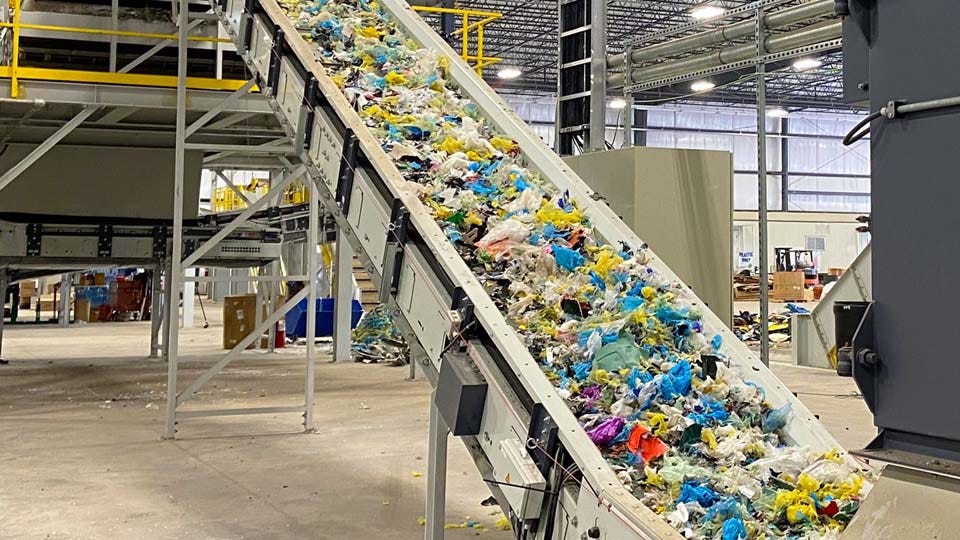
Plastic waste is collected, colour-categorized and cleaned, then shredded into fine granules. These are then melted down and reprocessed into resin pellets. The resulting pellets are then reheated, extruded and formed into a new product.
PCR can be added in percentages ranging from 10% to 100% along with virgin plastic depending on the manufacturer’s preference. If post-consumer resin is used to manufacture plastic film, a higher percentage can impact transparency and color. Some companies choose to incorporate less PCR in their products and more virgin resin so the material can retain the look of virgin resin. For example, if a product is composed of 25% PCR and 75% virgin resin material, then the product will look more like virgin plastic. In some application plastic film are intended for products that do not require transparent appearance, higher proportion of recycled resin can be applied.
In a circular economy, the innovative approach is all about repurposing plastic that’s already been used, rather than just creating new plastic all the time.
Less new plastic in the world, and the same high standard of quality—that’s what we call a win-win.